"Barcode" isn't one format — it's a family of symbologies, each designed for a different job. Here's a plain-English rundown of the ones you'll actually run into.
CODE128
A compact, high-density format that can encode the full ASCII character set — letters, numbers and symbols. It's the default choice for shipping labels, internal inventory codes, and anywhere you need a flexible, general-purpose barcode.
CODE39
An older, less dense format limited to uppercase letters, digits and a handful of symbols. It's still common in government, defense and some manufacturing settings because it doesn't require a checksum to read reliably.
EAN-13 and EAN-8
The standard retail barcode used across Europe and most of the world — that's the code printed on nearly every product you buy in a supermarket. EAN-13 encodes a 13-digit product number; EAN-8 is a shorter version for small packaging.
UPC-A and UPC-E
The North American counterpart to EAN, found on retail products throughout the US and Canada. UPC-E is a compressed version used when shelf space is tight.
ITF (Interleaved 2 of 5)
Common on cardboard shipping cartons and pallets. It's tolerant of the lower print quality typical of corrugated packaging.
Data Matrix
A compact 2D format that packs a lot of data into a very small square — used heavily in electronics manufacturing and to mark small medical or pharmaceutical items where space is extremely limited.
PDF417
A 2D stacked format capable of storing large amounts of data, used on driver's licenses, boarding passes, and shipping documents that need to carry structured information offline.
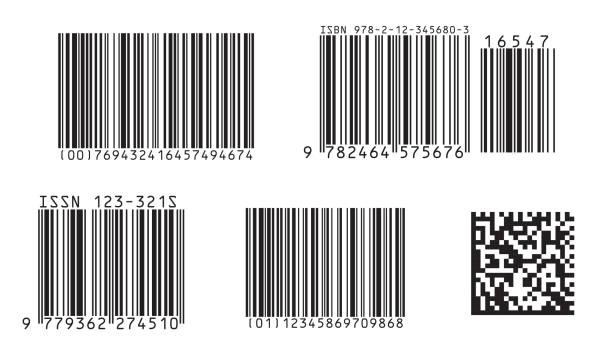
Publishing formats like ISBN and ISSN are really just EAN-13 codes with a special prefix — see the glossary for the underlying encoding.
Aztec
Another 2D format, popular for airline boarding passes and event tickets because it scans reliably even on a small phone screen.
Choosing the right one
If you're printing something for retail shelves, EAN or UPC is almost always mandatory. For internal logistics or inventory, CODE128 is the flexible default. If you need to pack in a lot of structured data on a small label, look at a 2D format like Data Matrix or PDF417. BarcodePro's generator supports the most common symbologies for free — try a few and see which prints cleanest for your use case.